
Media, speaking & commentary
Amanda di Medici
Financial intelligence, from someone with nothing to sell you.
Founder of Yenom, with a background in law, finance and adult education.
Amanda works with employers, individuals and communities on financial intelligence: the personal styles, behaviours, habits and goals behind the numbers, not only the numbers themselves.
She comments on cost of living, scams, financial regulation and money at work.
Yenom is non-advisory and doesn’t recommend any financial products, like loans, savings accounts, or mortgages. This is precisely why she can say what she thinks.
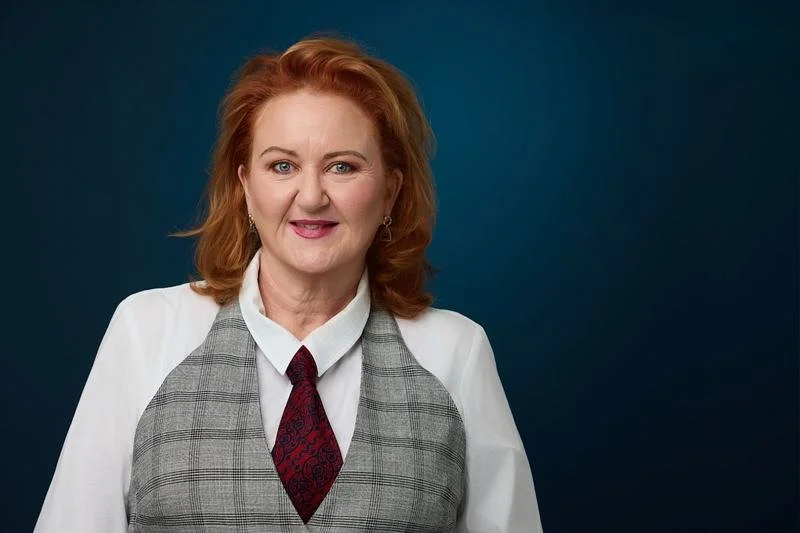
Independent by design
Yenom doesn’t sell financial products, doesn’t take commissions and doesn’t give personal financial advice. What Amanda offers instead is informed, real-world financial education, grounded in what actually happens in people’s lives. For a journalist, that removes the conflict that usually comes attached to a finance commentator: there is no book to talk, no fund to promote and no bank behind the answer. It is the reason her commentary has run in national banking trade press as often as on community radio.
& education
Where she has appeared
As featured in
Twelve placements across eight outlets between June and October 2026, spanning national banking trade press, national HR and workplace press, a regional daily front page, community radio and two podcasts. The range matters more than the count: the same argument holds up in front of a specialist finance audience and a general one.
The record
Selected media
Grouped by medium rather than by date, so a producer can hear how she sounds and an editor can see how she reads.
Radio, and a standing monthly booking
“What’s your financial personality?” — money archetypes
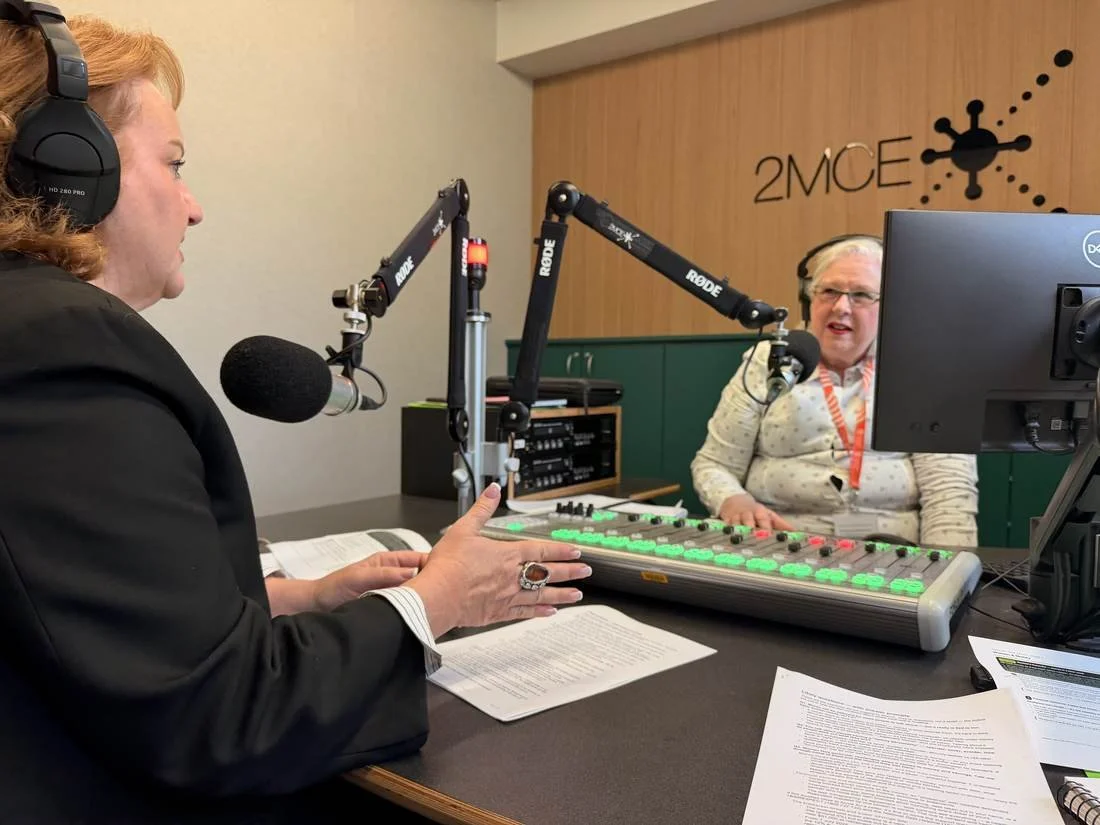
“Women & Money” — in studio, the first of the monthly run
“A Million Stories” — National Refugee Week
Print and online
“The best money lesson isn’t a budget, it’s knowing yourself” — by-lined column
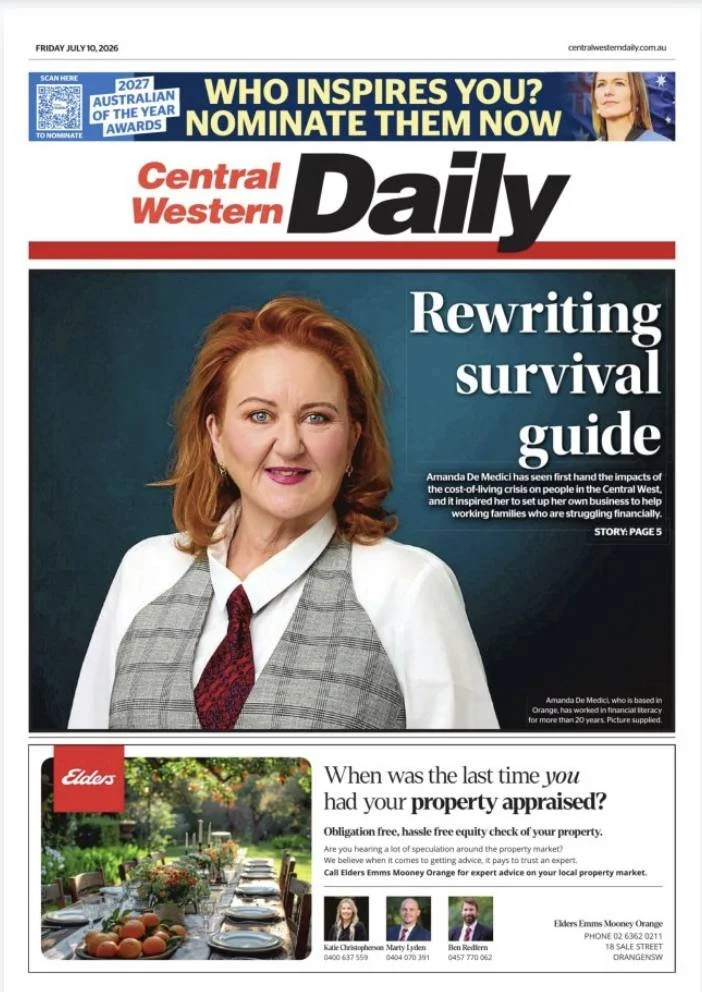
“Rewriting survival guide”
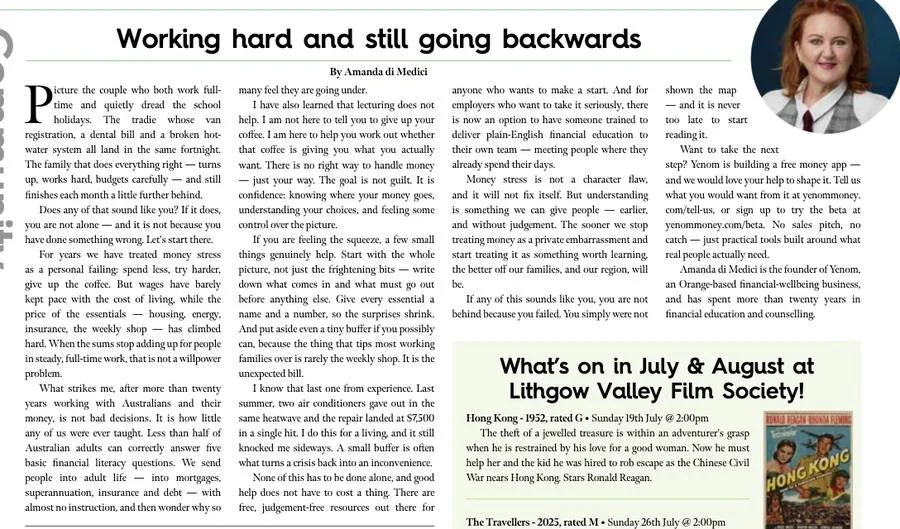
“Working hard and still going backwards” — by-lined column
“The family that does everything right — turns up, works hard, budgets carefully — and still finishes each month a little further behind.”
Podcast
EP 103: “Money Backwards: Why Amanda di Medici Built Yenom”
Financial stress in partnerships
On the platform
Speaking and events
Speaking engagements are marked as such. Events Amanda attends or sponsors are listed separately, because they are not the same claim.
PsychLab 2026, Brisbane
On financial stress as an unregistered psychosocial hazard, to a curated psychosocial-safety audience of clinicians, regulators and workplace-safety practitioners.
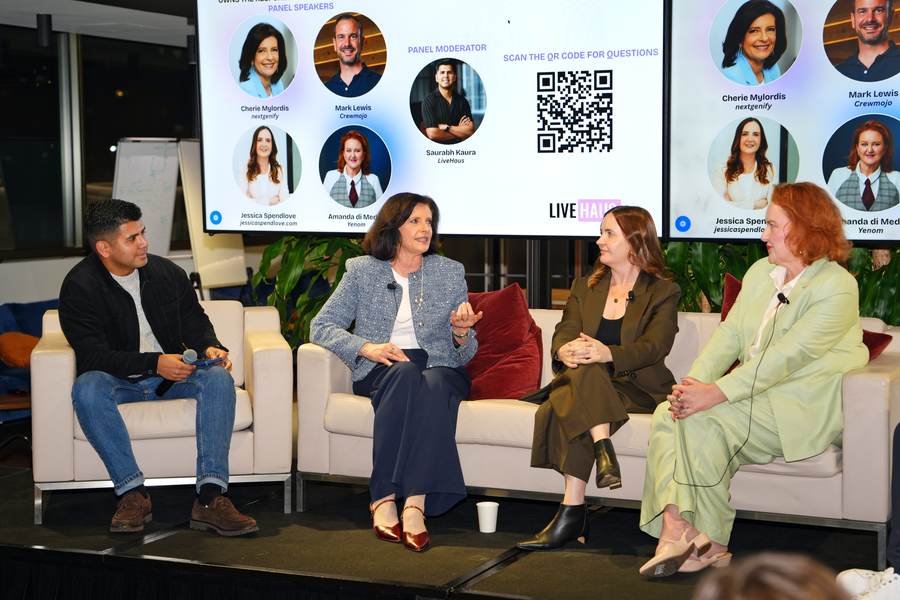
PeopleHaus, Power Panel
On the panel, on financial wellbeing for the modern workforce. A business audience, in a panel format, taking questions.
Convene 2026, Brisbane
Social Traders’ national gathering for social enterprise. Attending, not speaking.
Wellbeing at Work Summit, Sydney
Yenom is a summit partner; Amanda is there in that capacity rather than on the programme.
Parliamentary Friends of Financial Capability, launch
Parliament House, Canberra. Personally invited to the launch of the parliamentary group; attended, not speaking.
WIMnet NSW, Cobar
Regional event sponsor; Yenom supported the event rather than presenting at it.

Areas of authority
What Amanda speaks to
The first eight areas below are already on the record. The last eight are subjects Amanda speaks to and is available for comment on, but has not yet been covered on.
Cost of living, and working hard while going backwards
The households who do everything right and still cannot get ahead. Amanda talks about this from lived experience rather than from a spreadsheet, which is what made it a front page rather than a finance column.
Published · Central Western Daily front page, 10 July 2026; by-lined column, Central West Village Voice, 16 July 2026
The working poor
Employed people who are financially stressed but do not qualify for concession-card-based support. Most existing financial wellbeing programmes are built around a concession card or an income threshold. Yenom’s programmes are built for the employed, which is the gap nobody else is filling.
Published · Central Western Daily front page, 10 July 2026; by-lined column, Central West Village Voice, 16 July 2026
Money archetypes and financial personality
Most money advice assumes everyone takes in the same information the same way. Amanda starts somewhere else: the spender, the saver, the avoider and the rest, and what each one actually needs to hear. She uses a card set built for this in workshops, and it is the practical end of what she means by financial intelligence.
Broadcast and published · 2MCE Community Drive, 12 August 2026; by-lined column, Central West Village Voice, 14 August 2026
Scams, consumer protection and financial regulation
Where policy meets the person losing the money. Amanda argued that the Scams Prevention Framework “regulates the getaway but not the robbery”, and can hold a technical conversation about regulatory design without losing a general audience.
Published · Banking Day, 24 June 2026; national banking trade press
Money at work, and what financial stress costs employers
Roughly half the workforce has low financial capability, and it shows up as absenteeism, distraction and turnover long before anyone talks about money. AMP’s 2024 Financial Wellness Report puts the extrapolated cost to Australian business at $88.95 billion in lost revenue a year. Amanda speaks to this as an employer-side operational problem, not a wellbeing nicety.
Spoken · PeopleHaus Power Panel, June 2026; the basis of Yenom’s Workplace Financial Wellbeing Program
Women and money
The structural and behavioural reasons women end up with less, and what actually shifts it.
Broadcast · “Women & Money”, 2MCE Community Drive, 22 July 2026, in studio; now a monthly segment
Financial literacy in migrant and refugee communities
Why financial systems fail people who did not grow up inside them, and what culturally responsive education looks like in practice. A subject few Australian voices will speak on with any specificity.
Broadcast · “A Million Stories”, 2MCE, National Refugee Week, 18 June 2026
Money and relationships
Financial stress inside partnerships. The arguments that are about money, and the ones that only look like they are.
Podcast · Financially Empowered Women with Dionne Payn, 7 August 2026; For Love & Money with Carolyn Butler-Madden, 13 August 2026
Financial capability as public policy
The case for treating financial literacy as national infrastructure rather than a personal responsibility, and what a coordinated approach would need to look like.
Not yet covered · federal policy coverage; Parliament House launch, 18 August 2026
Universal basic income in an AI-driven world
Amanda wrote a whitepaper on a universal basic income for Australia in May 2026: what the international trials in Finland, Stockton and Kenya actually found, what a universal payment would cost against the existing welfare budget, and how it compares with the alternatives. Her conclusion is deliberately narrow, that the evidence now justifies an Australian feasibility programme and domestic pilots rather than immediate adoption. AI is what makes it timely: the whitepaper cites estimates that 32 per cent of Australian jobs have task profiles substantially exposed to generative AI, on a short policy lead time.
Not yet covered · whitepaper on file, A Universal Basic Income for Australia, May 2026
Artificial intelligence and everyday money management
What AI tools can and cannot responsibly do with someone’s finances, and where the line sits between guidance and advice. Yenom is building in this space, which makes her a practitioner rather than a spectator.
Not yet covered · AI-in-finance coverage; consumer technology reporting
Financial wellbeing as an employer obligation
Where financial capability sits inside ESG reporting and duty-of-care conversations, and why employers are increasingly being asked about it. A business-press angle rather than a consumer one.
Not yet covered · HR, workplace and ESG reporting
Money and wellbeing, and financial capability as a core life skill
Where money sits in the hierarchy of needs. Amanda’s argument is that financial capability belongs with the basics, closer to food and shelter than to self-improvement, and that treating it as an optional extra is why so much financial education lands on people who are in no state to use it.
Not yet covered · wellbeing, workplace and education reporting
Credit, credit reporting and personal data
What companies can and cannot do with someone’s private financial information, how credit reporting and credit scores actually work, and where the law sits. A consumer-rights subject most people only look into once it has already gone wrong.
Not yet covered · consumer affairs, privacy and personal finance reporting
Debt, bankruptcy and predatory lending
Payday loans and rent-to-buy schemes, the difference between debt consolidation and a debt agreement (not the same thing, and the distinction costs people money), and the case for treating bankruptcy as a legitimate second chance rather than a moral failure.
Not yet covered · consumer affairs, personal finance and legal affairs reporting
Financial intelligence and new graduates
One of the three groups Amanda identifies as most underserved, alongside women and new migrant communities, and the one least often given a voice in coverage. The move from study into a first salary is where financial habits set, and almost nobody is teaching it.
Not yet covered · higher education, early-career and cost-of-living reporting
Behind the expertise
The work it comes from
Amanda does not comment on financial literacy from the outside. Yenom is a profit-for-purpose organisation with two arms, and she runs both.
Yenom Workplace Wellbeing
The profit-for-purpose arm
- The Workplace Financial Wellbeing Program, delivered to employers as an independent partner
- Online and in-person financial literacy training
- Train the Trainer programme, Cert III Financial Literacy Education, delivered under an RTO agreement
- Confidential, non-advisory financial counselling
- Programmes for individuals, built on gamified and culturally responsive learning rather than lectures
- The Yenom app, the end-user support app: daily, non-judgemental awareness of spending habits, support to set and reach goals, and community activities
The Yenom Foundation
The charitable arm
- Accredited training
- Advocacy for underrepresented communities. Open to everyone, with the working poor first, because their income excludes them from almost every other programme, alongside new graduates, new migrants and women. Universal basic income and AI disruption to workplaces are both part of that advocacy.
- Instructor and student pathways
The profit-for-purpose arm funds the charitable one. Financial capability is treated as a right rather than a product, which is the position every piece of coverage on this page has been built on.
One page, everything needed
Bio and photography
Bio
For introductions, bylines and programmes
Amanda di Medici is the Founder and Chief Executive of Yenom, a financial literacy educator with qualifications in law, finance and adult education and more than twenty years’ experience delivering financial literacy education across Australia. She has delivered the ANZ/Good Shepherd Saver Plus matched savings programme, taught at TAFE NSW, and worked as a financial educator and mentor with some of Australia’s most financially vulnerable populations.
High-resolution photography
Approved headshots, ready to download
A folder of approved, high-resolution headshots for print and online use.
Download headshotsMedia and speaking enquiries
Amanda is available for interview, comment and speaking engagements.
She has live and pre-recorded radio experience, works comfortably in studio, and holds a panel.